How Long Do Water Softeners Last? Life Expectancy & Replacement Signs
Quick Summary: A well-maintained water softener lasts 10 to 15 years, and salt-free conditioners can last 20 years or more. In Ontario, CA — where water hardness averages around 250 ppm — softeners work harder than average, which makes maintenance matter more. This guide covers the factors that shorten (or extend) a softener’s lifespan, how salt-based and salt-free systems compare, five signs your unit needs replacement, and practical steps to get the most years out of your system.
The average life expectancy of a well-maintained water softener is 10 to 15 years. With proper, consistent maintenance and care, a softener can last even longer — and in a very-hard-water city like Ontario, California, that care makes a measurable difference.
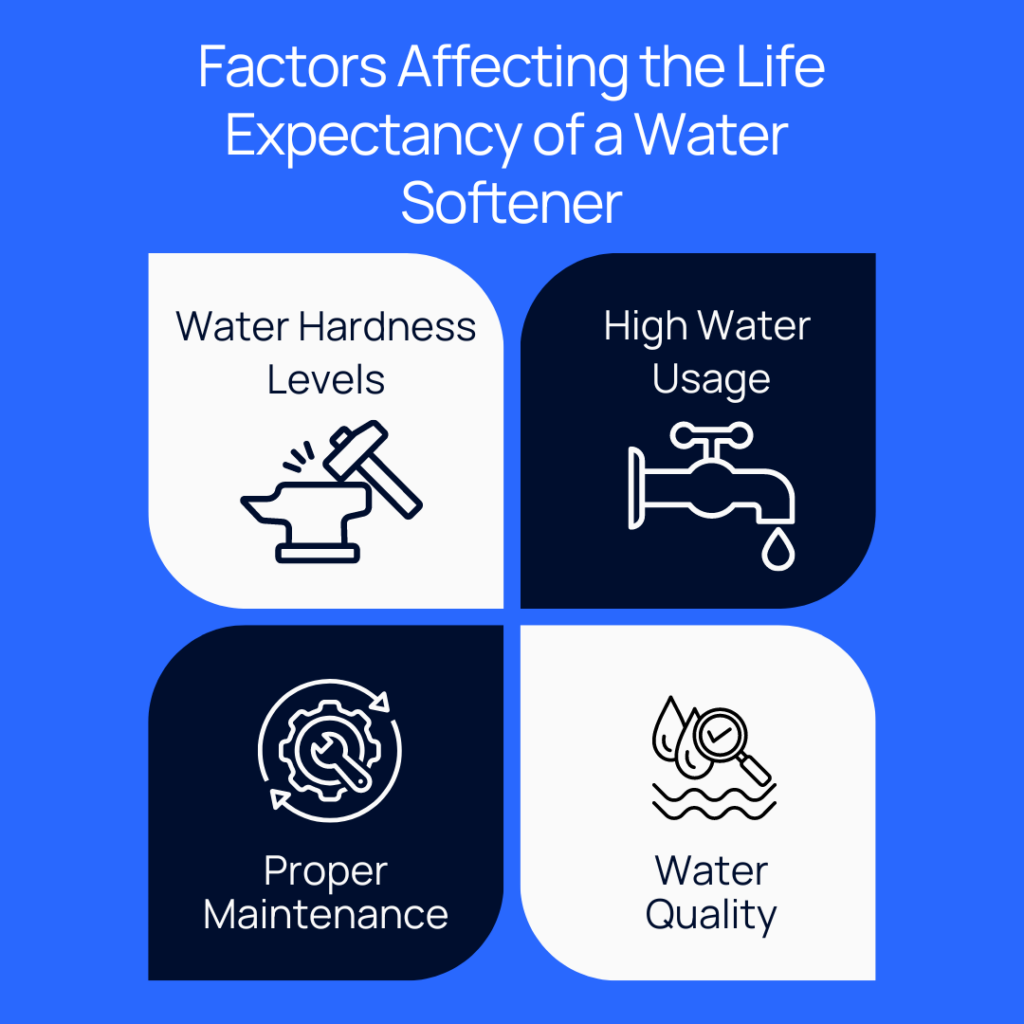
Factors Affecting the Life Expectancy of a Water Softener
Water hardness levels affect lifespan directly. The harder the water, the harder the softener works to remove minerals like calcium and magnesium. Ontario’s water averages around 250 ppm (about 15 grains per gallon) — firmly “very hard” — so local systems cycle more than softeners in soft-water regions.
High water usage means more frequent regeneration cycles, and each cycle adds wear. A large household will work a softener harder than a one-person condo.
Maintenance is the biggest factor you control: cleaning the resin tank, checking the brine tank, and keeping salt at proper levels. Neglected maintenance shows up first as reduced efficiency and eventually as a shortened lifespan.
Overall water quality matters too. Sediment, iron, and other contaminants in your Ontario home’s water can foul the resin bed and force the system to work harder. A water test tells you whether pre-filtration would protect your softener.
Salt-Free Water Conditioner vs. Traditional Water Softener Lifespan
A salt-free water conditioner generally outlasts a traditional salt-based softener: roughly 10–15 years for salt-based systems versus up to 20 years or more for salt-free conditioners with proper care.
The difference comes down to regeneration. Salt-free conditioners don’t regenerate; they use template-assisted crystallization to keep minerals from sticking as scale, with no salt, no backflushing, and minimal moving parts. Salt-based softeners regenerate on a cycle and need regular upkeep — which, if neglected, shortens their life.
Salt-free units may last longer, but they condition rather than soften — they reduce scale buildup without fully removing hardness minerals. In a very-hard-water city like Ontario, many homes still get the best results from a true softener. A water test settles which is right for your home.
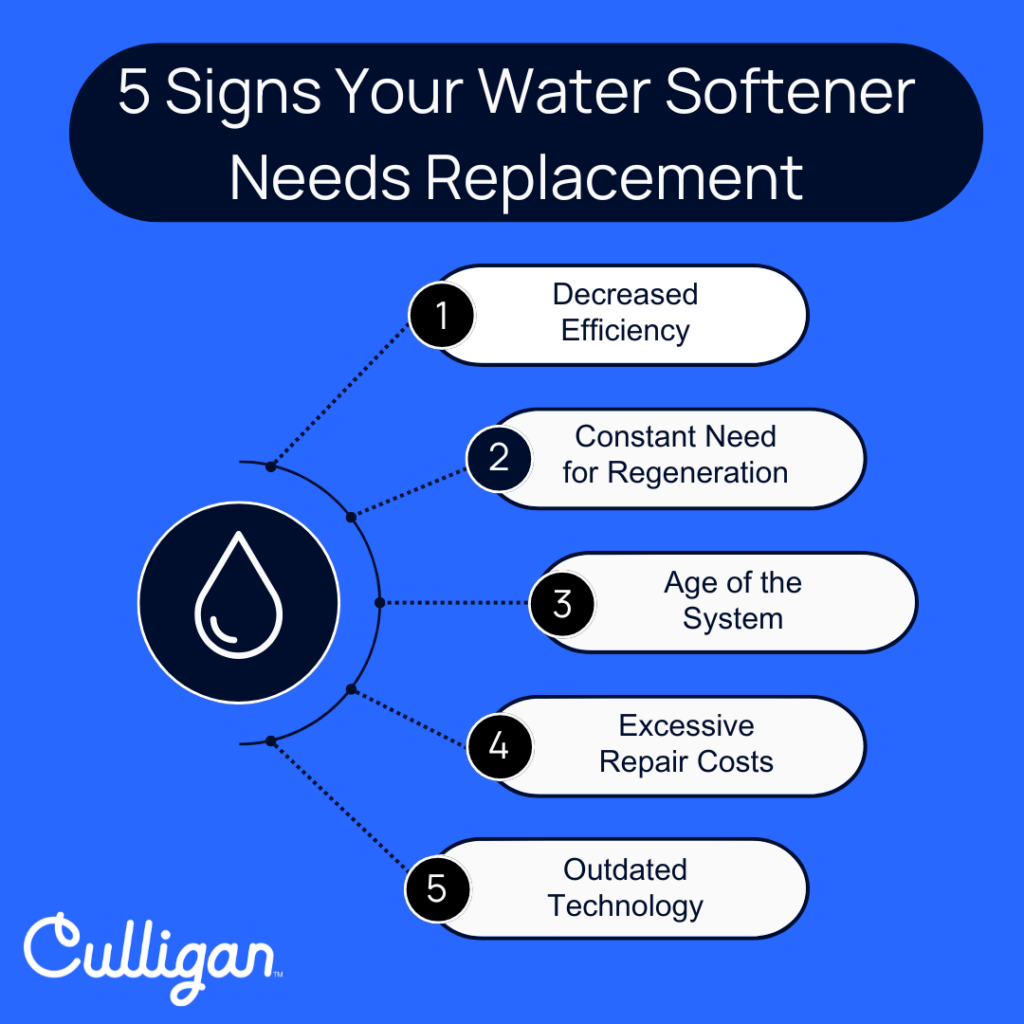
Five Signs Your Water Softener Needs Replacement
1. Decreased softening efficiency: dry hair and skin, limescale creeping back onto fixtures, or stiff laundry mean your water is harder than it should be with a working softener.
2. Constant regeneration: if the system regenerates more often than usual or you keep running out of soft water, the resin bed may be failing.
3. Age: at 10–15 years old, replacement is worth evaluating — especially if other symptoms are showing. A newer high-efficiency system will also use less salt and water than a unit from the mid-2010s.
4. Mounting repair costs: when repair bills recur, replacement is usually the more cost-effective path.
5. Outdated technology: smart monitoring, demand-initiated regeneration, and high-efficiency resin have all improved meaningfully — an upgrade can pay for itself in salt and water savings.
How to Extend the Life of Your Water Softener
Regular maintenance — cleaning the resin tank and checking the brine tank — keeps the system running efficiently and prevents the issues that shorten lifespan.
High-quality softener salt prevents salt bridges and buildup that degrade performance, and maintaining proper salt levels in the brine tank protects the resin bed through every regeneration.
Mind your water use. Softeners handle normal household demand easily, but sustained excessive use adds regeneration cycles and wear.
Address water quality changes promptly. If you notice hardness creeping back or new staining, don’t wait — schedule a free water test and catch the problem while it’s small.
Protect the system from extreme temperatures, and use professional installation and servicing — a Culligan Water Expert can spot developing issues at service visits long before they become failures.
While the life expectancy of a water softener varies with hardness, usage, and care, a few proactive steps let you enjoy softened water for years longer — and in Ontario’s very hard water, that protection pays for itself in appliance life and energy savings. If your softener is showing its age, explore Culligan’s current high-efficiency softeners or talk to your local Culligan Water Expert.